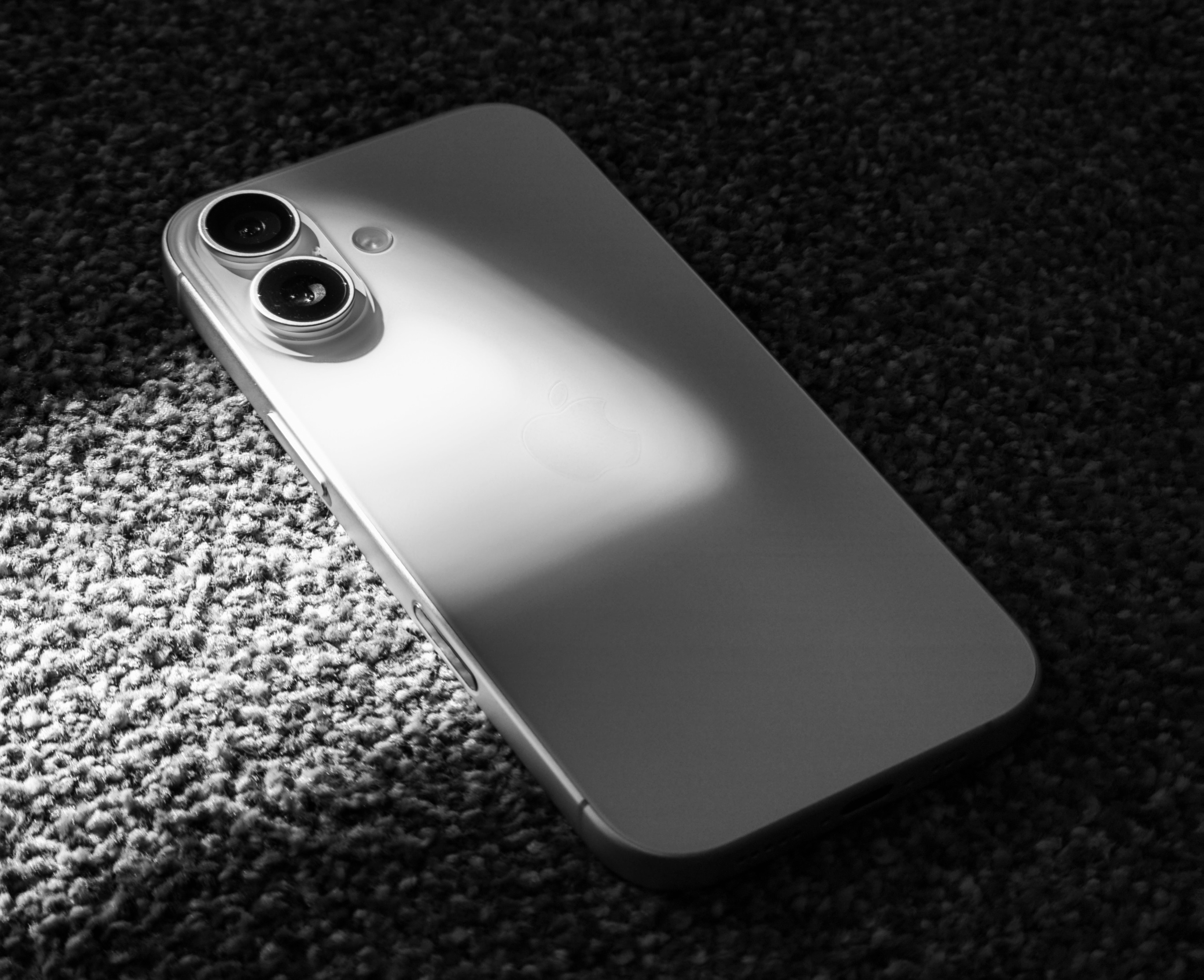
The iPhone 17 is not revolutionary. Where the modern iPhone lacks in innovation, the iPhone 17 truly dominates in experience.
The review is split into 3 parts; the iPhone 17 itself, iOS, and why I chose to switch from my Samsung Galaxy S23 Ultra. Feel free to use the Table of Contents above to jump to what interests you most.
iPhone 17
This year, Apple made a base iPhone worthy of the iPhone moniker. Unlike prior generations, the gap between the Pro models and the base 17 has shrunken so much, to the point where it is truly just the “Pro” features being the differentiators.
- 48MP 4x telephoto
- USB 3 instead of USB 2
- Vapor chamber
- A19 Pro
- ProRaw, ProRes RAW (or any RAW formats in the native Camera app)
- Slightly bigger main camera sensor That’s pretty much it. The display is exactly the same, battery sizes are comparable enough (especially in regions where eSIM only iPhone 17 Pro doesn’t exist), processor speeds are both still faster than the A18 Pro, and both get the new selfie square sensor.
Display
I’d wager that this is the most important part of a modern phone. Without a screen, you can’t do anything. You can’t call since you need to use the screen to get there (yes, you could ask Siri). Rather than handicapping the base models yet again to forever be behind its Android counterparts, the iPhone 17 gets a display which rivals more pricy phones. 3000 nits of 1-120Hz Liquid Retina/OLED is just so pleasing to look at, combined with those razor thin bezels. This is something that I actually notice, coming from an S23 Ultra with non-uniform bezels.
Yes, there is a big hole in the display conversation, the island shaped hole. But honestly? I don’t hate it and it’s all thanks to Dynamic Island; with its very smooth animations and app integrations, making it feel purposeful.
Build
The aluminium frame is a concern of mine, especially after seeing the various posts online about how easily it can scratch, particularly on the iPhone 17 Pros. But as Apple did not use the Pro’s new unibody design, there’s less of a surface area for damage, which can be easily remedied by using a case. I’m always using a case and a screen protector, so the aluminium sides don’t impact me too much, but a friend I know already has a scratch on his 17 Pro, thanks to the exposed camera plateau.
The weight is great. Sometimes I have to use a family member’s iPhone 16 Pro, and it has always felt chunky to me, which doesn’t make sense at all, considering the VERY similar device footprint… Until you realise there’s a ~40g difference in weight between the two. This absolutely does make an impact, and just makes the iPhone 17 feel more ergonomic, even if it should be physically comparable to its more expensive predecessor.
USB C. I realised that I don’t use wired connections much, but what was more important to me was charging speeds and the actual USB C connector itself. There was no way I’d downgrade to Lightning after every single one of my devices have adopted the USB C port.
Speakers are just so good here. I’m sure they’d be better on the Pros, but they’re great, even outdoing my physically larger iPad 11th Gen (A16) when it comes to clarity and overall soundstage.
Cameras
As someone who came from the S23 Ultra which gives you a main, ultrawide and 2 telephotos - 3x and 10x - naturally the lack of any telephoto lens on the iPhone 17 made me concerned. This was the biggest downside which almost made me not upgrade, especially since ~30% of all photos I took were with the telephoto lens. But I realised something, I’ve only taken around 3000 photos since 2019, which sounds like a lot, but in the grand scheme of my phone usage, really isn’t that much and is skewed by photos on holidays. So why should I ignore a good phone for a feature that I really don’t use a lot?

The main and ultrawide lens of the iPhone 17 are actually quite nice. The lack of a telephoto lens has forced me to be more creative, and actually try to use the ultrawide. Constriction breeds creativity they say. I did pick up the Moment Pro Camera ii app (it was on a pre-sale for $8 AUD), because without it, you actually can’t take normal RAW photos on a non-Pro iPhone. Annoying restriction, but that’s the Apple way I suppose. I wasn’t much into RAW photography on my S23 Ultra, but it’s quite fun. Combining it with Lightroom gives me the flexibility to create the photos that I want, with all the detail I need.

May make a future article on the Moment Pro Camera ii, but who knows?
The new square selfie is one of my favourite camera features today. As the designated selfie photo taker, I get lots of joy being able to take landscape photos without having to awkwardly turn my hand. The (what feels like) bigger field of view also just makes fitting everyone in the frame that much easier.
I did expect to use features like Photographic Styles and Camera Control a bit more, but it turns out the iPhone 17’s colour science is less overly warm than I was used to expecting for an iPhone, which means I could just use the standard profile. I do use the Camera Control, just as a camera quick launch button. Do I sometimes mistake it for a fingerprint reader? Maybe, maybe not, you’ll never know.
Value
The word ‘value’ has never been synonymous with iPhone. iPhones were becoming more of a status symbol, blurring the border between trend and technology. But I think the iPhone 17 recaptures the value proposition that an iPhone used to have, especially when compared to its competition.
The iPhone 17’s main competitors (in Australia at least) are the Samsung Galaxy S25, and the Google Pixel 10, with every other brand not really being a consideration, particularly for the less tech-inclined. So to understand why the iPhone 17 can even be associated with ‘value’, we need to step back and evaluate the competition.
See the spec breakdown of the Galaxy S25, Pixel 10 and iPhone 17 over at GSMArena.
Galaxy S25
At the A$1,399 RRP, the Galaxy S25 is the closest to the iPhone in terms of overall package. It had the fastest chip Android had to offer at the time, a pretty good display, same storage and even more RAM. It even has a 10MP 3x telephoto lens!
But for me where the S25 falls flat, is ‘value’ in terms of upgrading from a prior Samsung flagship. If you compare it to the base Galaxy S22, the main differences are slower processor, less bright display and less base storage, and if you compare it to the rumours of the S26, all the cameras are looking to be the same yet again, for a 5th/6th year running. Where it also fails for me, is OneUI. OneUI 1 had vision, one-handed friendly UI that put consistency first. OneUI 8? A mishmash of all the various UI skins, without direction. I may not be the hugest fan of Material 3E, but at least it has a direction that it is aiming for. It feels like Samsung has put their flagship S series in the backseat, putting all their attention into their Z foldables.
Pixel 10
What about the Pixel 10? At $1,349 RRP, it makes even less sense than the Galaxy S25. Unlike its Samsung counterpart - who at least has dependable hardware even if stagnant - the Pixels just haven’t had a great history, with last year’s Pixel 9s getting extended warranties due to more hardware issues. Hardware quality issues aside, Tensor really isn’t making a name for itself either (a good one at least). Sure it does allow some of Google’s AI to be run on device, but a decent chunk do still operate on Google’s servers such as Video Boost or Gemini itself. The Tensor chip even after the move to TSMC’s foundries, is still at least 1-2 years behind the competition every single year, in performance, efficiency, and heat management, although Qualcomm’s new 8 Elite Gen 5 seems to be burning up in its OnePlus 15 debut.
Pixel software truly is gunning for most optimised, but I’m honestly just not a fan of the actual implementation of Material 3E. In the trailers it looked playful, distinct. In reality, a desaturated mess of odd shapes that just makes the UI feel cheap. Some parts look nice, like the new quick settings panel, but the overall UI in apps like the Clock are just too cartoonish for me.
At the aforementioned A$1,349 RRP however, it doesn’t even undercut the iPhone 17, since that Pixel 10 configuration is the 128GB storage option. To match the iPhone 17’s base 256GB, you would have to step up to the A$1,499 RRP price tag. Google knows this, and often puts the Pixel 10 on sale (as I’m writing this, the Pixel 10s are A$899, A$1,409 for 128/256GB respectively), justifying its existence. The cameras are another interesting case, with the main being a slight downgrade from the 9, but in return now gets a 10.8MP 5x zoom lens, upping the camera count to 3. Google has also decided to add Pixelsnap, their Magsafe equivalent compatible with the Qi2 specification, clearly targeting the iPhone demographic looking to depart after iOS 26.
So why does the iPhone 17 resemble ‘value’?
It’s a known fact that Apple takes years to implement what the competition has added overnight. But typically when they do, it’s done well. The iPhone 17s finally get a higher refresh rate display, and rather than just a standard 120Hz panel, it’s the exact same 1-120Hz 3000nits panel that is used in the iPhone 17 Pro. The brand new selfie camera that came to the 17 Pros also came to the 17. The 48MP ultrawide came from the Pros, now resides in the base 17. The A19 is still faster than last year’s A18 Pro. Same scratches-at-a-level-7 Ceramic Shield 2 as the 17 Pros. Double the base storage compared to the 16s. UWB Gen 2, just like the 17 Pros. Faster charging over AVS, like the 17 Pros. For how much more compared to the base iPhone 16?
The exact same price.
For once Apple didn’t treat the base model iPhone as the ‘cheap’ phone it never really was (iPhone 17 starts at A$1,399 RRP with 256GB), largely thanks to the existence of the iPhone 16e, now taking a permanent ‘cheap’ iPhone spot.
iOS
As I weighed my decision to either switch to iOS or remain on Android, I compared the two and found that they’re a lot more similar than you’d think. Largely because Apple, Google, Samsung, Xiaomi, Oppo and the entire smartphone market are just copying features from each other. I don’t think I could’ve made the move to iOS any earlier than this year, but I eventually decided that iOS has copied enough features from Android to make it worth my while.
Features that iOS now has
- Widgets (including widget stacks!)
- Always-on Display
- Moving icons to wherever on screen
- Customisable icons (including better forced auto theming!)
- IPA (APK alternative loophole, but worth a mention anyways.)
- Default app selections
In all of the above, except one or two, the iOS implementation is annoyingly better and more thought out. I always liked Google’s Material YOU uniform icon theming, but I just hated that some icons wouldn’t be themed, leading to very patchy home screen setups. Google has seemed to finally fix this with the latest Android 16 QPRs, but judging by the state of Material YOU adoption across other OEMs’ UI skins, I don’t think this came fast enough to convince others to stop copying iOS.
I never got to use the AOD on my S23 Ultra since it would just drain so much battery. Since Apple however only allows AOD on OLED devices with a 1-120Hz variable refresh rate screen, it surprisingly leaves a negligible impact on my battery, even though I have my wallpaper also showing, leading to very little screen fully off time.
About default app selections. On Android you could always choose your default browser, password managers etc. But I always struggled at using passkeys since Android wouldn’t let me save it to Bitwarden. But while setting up my iPhone, I could actually use Bitwarden’s passkeys! Weird to see default apps being treated better on iOS than on Android.
iOS 26 and Optimisation
iOS 26 is a divisive update that honestly needed more time and more quality control.
Best small features rapid fire:
- Calls and video calls from every social media app appearing in the Phone app.
- App Store updates not causing lag spikes while updating.
- Hold Assist is great. While I am aware that Google Pixels have had Hold Assist for years, it is region locked, so it isn’t an internationally available.
Small features I want:
- Back button (Not a small feature but simple to justify).
- Lock orientation, NOT portrait lock orientation (I need to watch shows without it turning portrait!).
- Easier importing of local music files into Apple Music (without needing to sync from a Mac)
Not gonna lie, this list is a lot shorter than I thought it would be.
Keyboard
The biggest downside I have so far, and I don’t think I’m alone on this one, is the lack of a number row on the default iOS keyboard. A number row should be present/allowable on all languages, and more customisable keyboard configurations should also exist like height. Honestly the whole keyboard needs a revamp, it has been years since anything was done to the keyboard. Microsoft SwiftKey does exist with a number row, but I’d prefer if the default keyboard acts less like neglected software from years ago with weird gaps around the edge of the screen.
CarPlay
This one surprised me quite a lot. My old S23 Ultra was not a slow phone, yet whenever it ran Android Auto, you could see it really slow down, using more 60Hz than 120Hz. Yet when I spun up CarPlay on the iPhone 17, it didn’t slow down at all. No dropped frames, no laggy start, and consistently good performance. Not to mention, why does Google Maps on CarPlay have a speedometer, whereas the Android Auto version does not???
General app quality
Google Maps is just one example of how apps are annoyingly better on iOS. You’d think that Google would optimise their apps for Android, their own OS, yet Google Maps feels noticeably better, with more features present on both iOS/CarPlay than its Android counterpart. Snapseed is a huge one, Android’s version has not been updated for 2 years, whereas the iOS version looks and functions like a completely different app, it’s unfair to even call them by the same name anymore. Google at least is slowly bridging the gap, but it is a bit embarrassing.
Then we get to camera access by third party apps. Fragmentation is what hurts Android here. While Google has made a decent effort to simplify the process through the Camera2 and CameraX APIs, you can see and feel how much better accessing the native camera is on an iPhone. This fragmentation is one of the big reasons why professional camera apps like Moment Pro Camera ii can’t exist on Android.

Siri
When it comes to on-device functions, Siri actually performs well, especially since more of it is done on-device, unlike Google’s Gemini which forces all commands to be handled on their servers, increasing the time it takes for a single command to be processed. The moment you step beyond on-device instructions however, Siri is just bad. It’s not reliable at all for simple research, and the ChatGPT integration is a bit undercooked. I do appreciate how well it works in telling me what my device can and can’t do, since I’ve used it a lot to understand how to use my iPhone.
Safari
I was ready to hate Safari, simply because it’s the default. But again, ecosystem syncing is just so good here. I made a tab group on my MacBook, and when I open Safari on my phone, the tab group is there, ready for immediate access! Very often that tab sharing between devices is finicky, but Safari and iCloud handle it so well.
iCloud
As a file storage service, it’s actually really nice. I don’t use it for photos since I want to remain on the free tier, but being able to have my Obsidian vault easily synced between all my Apple devices, is so much nicer than the Syncthing situation I had going on before. I don’t know why, but there was no way for me to sync an on-device folder to Google Drive from my Android phone, so I couldn’t replicate this even amongst pure Android devices.
Even the iCloud for Windows app was able to sync my laptop Obsidian vault to my iPad, before I fully immersed myself into the Apple ecosystem. This entire article was composed in an Obsidian vault stored in iCloud, which allowed me to write from anywhere, on any of my Apple devices like my iPhone.
Dynamic Island
This honestly makes my disdain for the large 3D sensor-front camera cutout disappear. Seeing apps animate so well with it, giving functionality to an otherwise ignorable area, turned a problem into an enviable feature.
Ecosystem lock-in
The Apple ecosystem gets better the more devices you have, which is definitely by design. iPhone Mirroring is actually quite nice, not resizable, but music and stuff automatically casted is so cool. The fact that I can directly open an iPhone app from my synced MacBook notification is useful. In Microsoft Phone Link, I had to keep unlocking my phone, which meant I had to pick it up anyways. Whereas I rarely have to unlock my phone to use Phone Mirroring.
Why did I switch?
There’s a lot I’d like to say about the current state of the Android market, which I will get around to writing about eventually. But the big question; why did I switch? Other than the already mentioned points, here’s what convinced me to finally jump ship.
1. Options in the Australian market.
Lack thereof, really. It’s definitely better than it was just a few years ago, however the Australian phone market is just so small. There’s the typical 3; Apple, Samsung, and Google. Oppo and Vivo has already existed but I didn’t like paying iPhone prices to get an iOS copycat. Nothing and now Xiaomi are entering the market, but Huawei’s departure really hurt the competitiveness of flagship devices.
2. Social ecosystem
Australia is largely an Apple country. iPhones, to be specific. I find that people who grow up here tend to skew Apple, especially younger people. AirDrop is a pretty known feature across a wide age range here, which makes photo/video sharing super easy. It’s so nice being able to just point my phone at another iPhone and have photos/videos directly share, without having to worry about compression and loss of EXIF data. iMessage lock-in will likely be a real issue soon enough, hastened by the under 16s social media ban, forcing people to find the easiest alternative service to message and call on. What’s more easy than the service that’s already on all their friends’ phones?
My entire family also uses Apple devices, we already have AirTags and an Apple TV. By being the only Android user, I get locked out of tracking lost items, simply AirDropping photos/videos, FaceTiming (it’s truly the best service for video quality if you have the bandwidth) and more. iMessage Games are weirdly nice too, shoutout to GamePidgeon.
3. Reliability of Samsung’s updates
A more subjective downgrade for sure. I ventured into Samsung devices with the Galaxy S22+, and the Galaxy Watch 5. The S22+ was great at first, I loved the cameras, performance was pretty nice and that OLED screen was just amazing to look at. But its weary battery grew old very quickly, forcing me to move on to the Galaxy S23 Ultra. I didn’t like the ergonomics of the S23 Ultra, the phone was so boxy and heavy, but it had what I wanted most - a good battery.
After 2ish years the battery felt like it got halved. The software had a lot of small jitters and laggy moments, which I eventually got used to. But again, the battery was my issue. So I decided to factory reset the device, and my battery nearly doubled! There it was, my solution. But after the next minor security update, the battery crashed and became what it was before, not as bad, but definitely not the improved version it was post factory reset. I couldn’t keep factory resetting it after every update, setting the phone up takes time, not to mention my Galaxy Watch 5 also has to factory reset (security issue) too.
Final thoughts
A month and a bit after switching, and turns out I’m quite happy with my move. It’s a move that rewards you, the more Apple devices you own. I won’t close the door on Android yet, and I really do hope that it becomes better. I’d also love to use a Linux based OS as my MacOS replacement, but that’s a conversation for another day.
For now, the best and most useful tool for me, is this comfortable iPhone 17. Thank you so much for reading this extremely lengthy article.